
Featured Posts
Blog

Subscribe to our newsletter.
Sign up with your email address to receive news and updates.
I thought finishing a manuscript would feel cinematic. Cue the swelling music, tears, a profound sense of accomplishment, maybe a bald eagle screeching overhead.
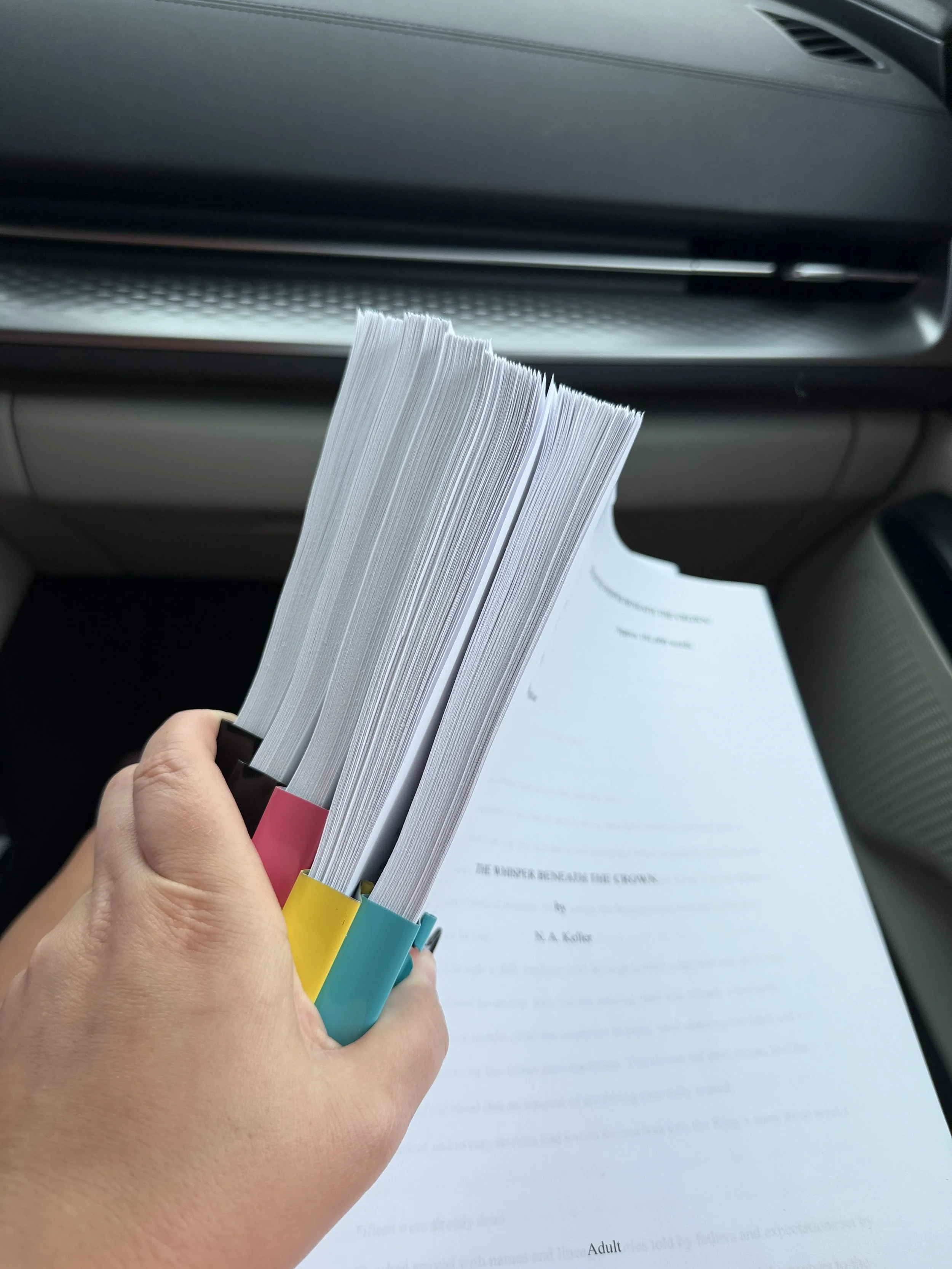
Instead, I typed “the end,” smiled for ten minutes, ran to the FedEx store to print my manuscript (while the employees tried not to stare at me while all 441 pages of it printed), and now I am sitting here staring at this BEHEMOTH of a book on my desk, that I wrote, and Googling things I probably should have known before writing 101,000+ words…
Whoops.
We tend to think of propaganda as something obvious or extreme, something loud enough that we would recognize it immediately. Most of the time, that simply isn't the case. Propaganda is often subtle, reinforcing what people already believe or narrowing what they are willing to question. It shames the frame before anyone realizes there is a frame at all, which makes it far more effective than anything overt.
Sign up with your email address to receive news and updates.
The best villains make sense because they are driven by a belief, not merely a goal.
One of my favorite questions to ask while drafting is whether my villain could explain their actions in a way that sounds reasonable. Not to everyone, and certainly not to the protagonist, but reasonable enough that a reader can understand how they arrived at their conclusions. If the answer is no, I usually haven't dug deeply enough into their motivations.